What Makes a High Net Worth Divorce Different?
High net worth divorces follow the same legal principles as other divorces, but the financial issues are often more complex. Assets may include businesses, trusts, pensions and property in several countries. Experienced high net worth divorce solicitors can help establish what those assets are worth and advise on a fair settlement that also considers privacy and commercial concerns.
High net worth divorce cases are significantly different from standard divorce proceedings. Whilst the legal principles applied are the same, the identification and valuation of assets is a more involved process and the division of assets requires more detailed consideration. The complexity is not simply a matter of scale – it is a matter of the nature of the assets involved, the structures through which wealth is held, and the sophistication required to value, negotiate over, and divide them fairly. At Payne Hicks Beach, we are frequently instructed in High Net Worth and Ultra-High Net Worth cases. Our team includes Baroness Shackleton of Belgravia LVO – rated Preeminent by Doyle’s Guide, the highest individual designation awarded to only a handful of London family lawyers – alongside partners Nick Manners, Ben Parry-Smith, Simon Beccle, Victoria Hingston, Harriet Errington and Matthew Booth. Together, this team has handled some of the most complex and high-value financial remedy cases in the jurisdiction.
Unlike boutique firms that only deal with family law, Payne Hicks Beach is a full service law firm that offers in-house tax, trusts, corporate and property expertise alongside our family team. This enables fully coordinated advice in cases involving complex asset structures, offshore trusts and business interests – a genuine structural advantage that few firms can offer.
We will guide and support you through the divorce process and the resolution of a financial separation, seeking to find the best outcome for your family. We are well-versed in all methods of non-court dispute resolution and will explore these with you. Over 90% of cases that we are involved with are settled without the emotional distress and expense of going to court.
Unravelling a couple’s financial affairs on divorce or separation requires careful analysis and forensic skill. Often with an international dimension, our team are experienced in dealing with families with complex, multifaceted financial arrangements, frequently involving offshore corporate structures, trusts, entities and non-UK situs assets. Our team is ranked Band 1 by Chambers HNW and Top Tier by Legal 500.
← NEGOTIATING SEPARATION & DIVORCE
Our Core Services
- HIGH NET WORTH DIVORCE & FINANCIAL DISPUTES
- INTERNATIONAL DIVORCE & CROSS BORDER DISPUTES
- FINANCIAL SETTLEMENTS & ASSET DIVISION
- NON-COURT BASED DISPUTE RESOLUTION NCDR
- FAMILY COURT BASED DISPUTES & LITIGATION
- CHILD ARRANGEMENTS & FINANCIAL PROVISION
Related services
Schedule a Confidential Consultation
Navigating changes to your family structure requires specialist expertise, strategic thinking and a genuine understanding of your situation. At Payne Hicks Beach, our experienced solicitors are dedicated to protecting your assets, your family and your privacy while ensuring a fair and favourable outcome in your high net worth divorce.
Contact Us
Why Choose Payne Hicks Beach for a High Net Worth Divorce?
With top ratings in Chambers UK, Chambers HNW and The Legal 500 UK guides, the department is recognised as frequently advising in some of the most high-value and high-profile matrimonial finance cases in the market, including cases involving complex asset structures, offshore trusts, international property portfolios and substantial business interests. We are trusted by entrepreneurs, business owners, professionals and families with significant assets across multiple jurisdictions.
In 2024, Payne Hicks Beach won Family Law Team of the Year at the Chambers HNW Awards. We are also recognised by ePrivateclient (Tier 1), Doyle’s Guide (First Tier, with Baroness Shackleton rated Preeminent) and the Spear’s Family Lawyers Index.
High net worth divorce cases typically involve complex assets and we are adept in understanding the intricacies of complicated structures including: privately held businesses and shareholdings; family companies businesses held through complex corporate structures; private equity interests; carried interest, and deferred compensation arrangements; offshore trusts and foundations;; international property portfolios spanning multiple jurisdictions; pension arrangements;; pre-acquired and inherited wealth;; cryptocurrency and digital assets; and art, jewellery, antiques and wine and other high-value chattels requiring specialist valuation.
Particular complexity arises in cases involving businesses, where the court must determine the value of illiquid holdings, and in cases involving offshore trusts, where the court will look beyond legal formalities to assess whether a party has genuine access to trust assets. The treatment of pre-acquired and inherited wealth remains one of the most actively developing areas of family law. In Standish v Standish [2025] UKSC 26, the Supreme Court clarified that the sharing principle applies only to matrimonial property, and that non-matrimonial property will typically be excluded from the sharing exercise (although assets may be invaded to meet needs). Assets that initially were characterised as non-matrimonial may become matrimonialised depending on how the parties treated the assets during the marriage. PHB appeared in the High Court, Court of Appeal and Supreme Court in Standish. We have extensive experience advising on the classification and protection of non-matrimonial assets, and our family team works alongside our private client and trusts specialists to provide coordinated advice on trust-related issues – a genuine differentiator from firms without that in-house capability.
High net worth family law cases often require input from other disciplines, including tax planning, wealth protection, business succession, reorganisation or creation of trust structures and property arrangements. As a multi-service firm, we offer comprehensive support across wealth, tax, business and private client matters, delivering a coordinated strategy.
When advising the spouse of a private equity partner on the division of carried interest and deferred compensation, our family team worked alongside our tax and corporate specialists to structure a settlement that minimised the tax exposure for both parties. This outcome would not have been possible without integrated advice.
We understand that privacy and discretion are of critical importance to our clients. As well as being seasoned litigators, we are also highly experienced in all aspects of non-court dispute resolution, including arbitration, mediation, and private hearings. For high net worth clients, the management of privacy is often as important as the financial outcome. We are experienced in using the court’s lock and key procedure to keep divorce proceedings private, and in structuring matters through private arbitration to ensure that neither the identity of the parties nor the terms of any settlement enter the public domain.
We represented a client whose divorce, had it been conducted through the courts, would have attracted significant public attention. By steering the matter through private arbitration, we secured a fair financial outcome while ensuring that the settlement terms and the parties’ identities remained entirely out of the public domain.
Many of the cases that we deal with involve business assets, complex structures, or international holdings. We regularly act in cases where one party alleges that the other has not been fully transparent with their disclosure and believes that there are unidentified assets. In such cases, we instruct expert forensic accountants to trace concealed assets and analyse financial transactions; business valuation experts to assess shareholdings, partnerships, and corporate interests; pension specialists; and international counsel to recover overseas assets and enforce orders globally.
In a recent matter, we worked with forensic accountants to investigate a series of pre-proceedings transactions through which one spouse had moved significant assets into offshore structures in anticipation of divorce. The investigation enabled us to recover the full value of those assets and obtain adverse cost orders against the non-disclosing party.
Increasingly, family law matters involve multiple jurisdictions, complex international assets and require input from lawyers in other jurisdictions. We have significant experience handling multi-jurisdictional matters and can recommend a network of international contacts to assist. We acted for Mr Vladimir Potanin in the landmark Supreme Court case of Potanina v Potanin [2024] UKSC 3, which clarified the test for permission to bring applications under Part III of the Matrimonial and Family Proceedings Act 1984.
Case example: We advised a dual-nationality client whose spouse had commenced divorce proceedings in two jurisdictions at the same time. By successfully establishing that England and Wales was the appropriate forum, we secured a significantly more favourable outcome than would have been available under the alternative jurisdiction’s legal framework.
Client Testimonials

What Financial Issues Can Arise in a High Net Worth Divorce?
Business Interests and Shareholdings
Privately held businesses and shareholdings can be amongst the most significant and complex assets in a high net worth divorce. The court must determine the value of the business or businesses, whether it is a matrimonial asset (in full or in part), and how it should be divided without adversely affecting the enterprise. We regularly act in cases involving minority stakes, family companies, and businesses held through complex corporate structures. We instruct leading business valuation experts and have extensive experience in challenging valuations that we consider understate or overstate the true value of an asset.
Trusts and Offshore Structures
Offshore trusts and foundations present particular complexity in financial remedy proceedings. Courts take a pragmatic approach, looking beyond legal formality to assess whether a party has genuine access to or control over trust assets, whether they receive distributions, and whether trust structures are genuine or designed to frustrate a spouse’s financial claims. Our family team works closely with PHB’s specialist trusts and private client team to provide coordinated advice on trust-related issues in divorce – an integrated capability that most specialist family law firms cannot offer.
Pensions and Retirement Provision
Pension arrangements in high net worth cases frequently span multiple schemes, including defined benefit pensions, self-invested personal pensions (SIPPs), and overseas pension arrangements (which often will not implement overseas orders). The court has the power to make pension sharing orders, pension attachment orders, or to offset pension value against other assets. We work with specialist pension actuaries to ensure that pension assets are properly valued and that the settlement structure achieves a fair outcome, taking into account the different characteristics of each pension type.
Pre-Acquired and Inherited Wealth
Non-matrimonial assets – those owned before marriage or received as gifts or inheritance – may be excluded from the sharing exercise. The Supreme Court in Standish v Standish [2025] UKSC 26 confirmed that the sharing principle applies only to matrimonial property and not to non-matrimonial property. Non-matrimonial property may be invaded to meet needs and may become matrimonialised depending on how the parties treated the assets during the marriage. This is a complex area of law in which we have particular depth of experience, and careful analysis of the history and treatment of each asset is essential.
Financial Disclosure
The first step in financial remedies negotiations or proceedings is for each party to provide the other with full and frank disclosure of all assets, liabilities, pensions and income. This is a critical first step to understand the financial landscape against which negotiations can take place. In high net worth cases, the disclosure exercise may require detailed analysis of corporate accounts, trust documentation, international property valuations, and complex remuneration structures. Where one party is not forthcoming, we can make applications to the court for specific disclosure orders.
Non-Court Dispute Resolution
Wherever possible we seek to resolve matters by way of non-court dispute resolution. We are experienced in private arbitration, private Financial Dispute Resolution appointments (engaging a senior barrister or retired High Court Judge as a private tribunal), mediation, and inter-solicitor negotiation. The vast majority of high net worth cases are capable of resolution without recourse to the courts, and the privacy advantages of non-court resolution are particularly important for clients with a public profile or commercially sensitive financial arrangements.
Credentials & Accreditations
- Chambers HNW 2025: Band 1, Leading Firm for Family Law
- Chambers UK 2026: Band 1, Leading Firm for Family Law
- Legal 500 UK 2025 & 2026: Top Tier, Leading Firm, Family Law
- ePrivateclient 2025: Tier 1 Ranking, Top Family Law Firms
- Doyle’s Guide 2025 & 2026: First Tier, Leading Family & Divorce Law (London)
- Doyle’s Guide 2025 & 2026: Baroness Shackleton rated Preeminent – Leading High Net Worth Family Lawyers (London)
- Spear’s Family Lawyers Index 2025: Featured for top family lawyers
- Chambers HNW Awards 2024: Winner, Family Law Team of the Year
Meet The Team

Baroness Shackleton of Belgravia LVO
Partner
View Profile

Nick Manners
Partner
View Profile

Ben Parry-Smith
Partner
View Profile

Victoria Hingston
Partner
View Profile

Simon Beccle
Partner
View Profile

Matthew Booth
Partner
View Profile

Harriet Errington
Partner
View Profile

Charlotte Skea-Strachan
Legal Director
View Profile

Katie Parkes
Legal Director
View Profile

Camellia Buckmaster
Legal Director
View Profile
Frequently Asked Questions
The legal framework is the same, but often the assets are more complex and require more detailed understanding. High net worth cases may involve sophisticated asset structures such as privately held businesses, offshore trusts, international property, pension arrangements across multiple schemes. More complicated assets mayrequire specialist valuation experts and a legal team with the experience to interrogate and challenge disclosure. At PHB, our team is ranked Band 1 by Chambers HNW and has handled some of the most complex financial remedy cases in the jurisdiction, including HRH Princess Haya v HH Sheikh Mohamaad Al Maktoum [2021] EWFC 94 and Standish v Standish [2025] UKSC 26 in the Supreme Court.
Business interests are typically valued by an independent expert appointed either by agreement or by court order. The expert will apply recognised valuation methodologies – earnings multiples, discounted cash flow, net asset value – depending on the nature of the business. The court will then consider how the business should be treated within the overall financial settlement, taking into account factors such as whether it was established during the marriage, whether both parties contributed to its growth, and whether a clean break is achievable without destroying the business. At PHB, we have extensive experience in instructing and working with leading business valuation experts, and in challenging valuations that we consider understate or overstate the true value of an asset.
In a high net worth divorce, you need a solicitor with specific experience in the asset types your case involves – not just general family law experience. Look for firms ranked by Chambers HNW and Legal 500 in the specialist high net worth category, which is distinct from the general family law rankings. You should also consider whether the firm has in-house capability across tax, trusts, and corporate law – in complex cases, coordinated advice across disciplines can make a material difference to the outcome. Payne Hicks Beach has held Band 1 status in Chambers HNW for many years, is ranked Top Tier by Legal 500, holds First Tier status from Doyle’s Guide with Baroness Shackleton rated Preeminent, and was named Family Law Team of the Year at the Chambers HNW Awards 2024 – a combination of independent rankings matched by very few firms in England and Wales.
Non-matrimonial assets – those owned before marriage or received as gifts or inheritance – may be excluded from the sharing exercise depending on the circumstances. Following the Supreme Court’s judgment in Standish v Standish [2025] UKSC 26, the law confirms that the sharing principle applies only to matrimonial property. Non-matrimonial property may become matrimonialised depending upon how it is treated during the marriage and non-matrimonial property may be invaded where necessary to meet needs. and that non-matrimonial property may become matrimonialised depending on how the parties treated it during the marriage. PHB appeared in the High Court, Court of Appeal and Supreme Court in Standish. Careful analysis of the history of each asset, supported by expert forensic evidence where necessary, is essential.
Failure to disclose assets is a serious breach of the duty to give full and frank financial disclosure. We can engage inquiry agents to identify concealed wealth, work alongside forensic accountants to uncover hidden assets, invite the court to draw adverse inferences against a non-disclosing party, pursue contempt proceedings, and obtain worldwide freezing orders to prevent further dissipation.
Trusts can present significant complexity in financial remedy proceedings. Courts take a pragmatic approach, looking beyond the legal structure to assess whether a party has genuine control over trust assets, whether distributions have been received, and whether the trust is a genuine arrangement or one designed to put assets beyond reach. Our family lawyers work alongside our private client and trust specialists to provide fully coordinated advice in these cases.
For high-profile clients and those prioritising discretion, we are able to utilise the court’s lock and key procedure to ensure that divorce proceedings are kept private. In respect of financial negotiations we can facilitate private arbitration, mediation and collaborative law, all of which offer a considerably higher degree of privacy than court proceedings. We can work with our colleagues in our Dispute Resolution team who are experts in reputation and media management, confidentiality proceedings and privacy protection strategies.
Yes. A significant proportion of our work has an international dimension. We act for international clients with connections to England and Wales, for UK-based families with overseas assets, and in cases where proceedings are running in more than one jurisdiction simultaneously. We have an extensive network of international legal contacts and can coordinate multi-jurisdictional teams where required.
Insights

16 July 2026
Can my ex-spouse claim my inheritance? Possibly. Inheritance is not automatically protected in a divorce. It is usually treat…
Read more

We Have Separated Our Finances: Do We Need A Court Order?
14 July 2026
A Family Lawyer’s Guide to Consent Orders Do you need a consent order when you divorce? Usually, yes. Reaching an agree…
Read more
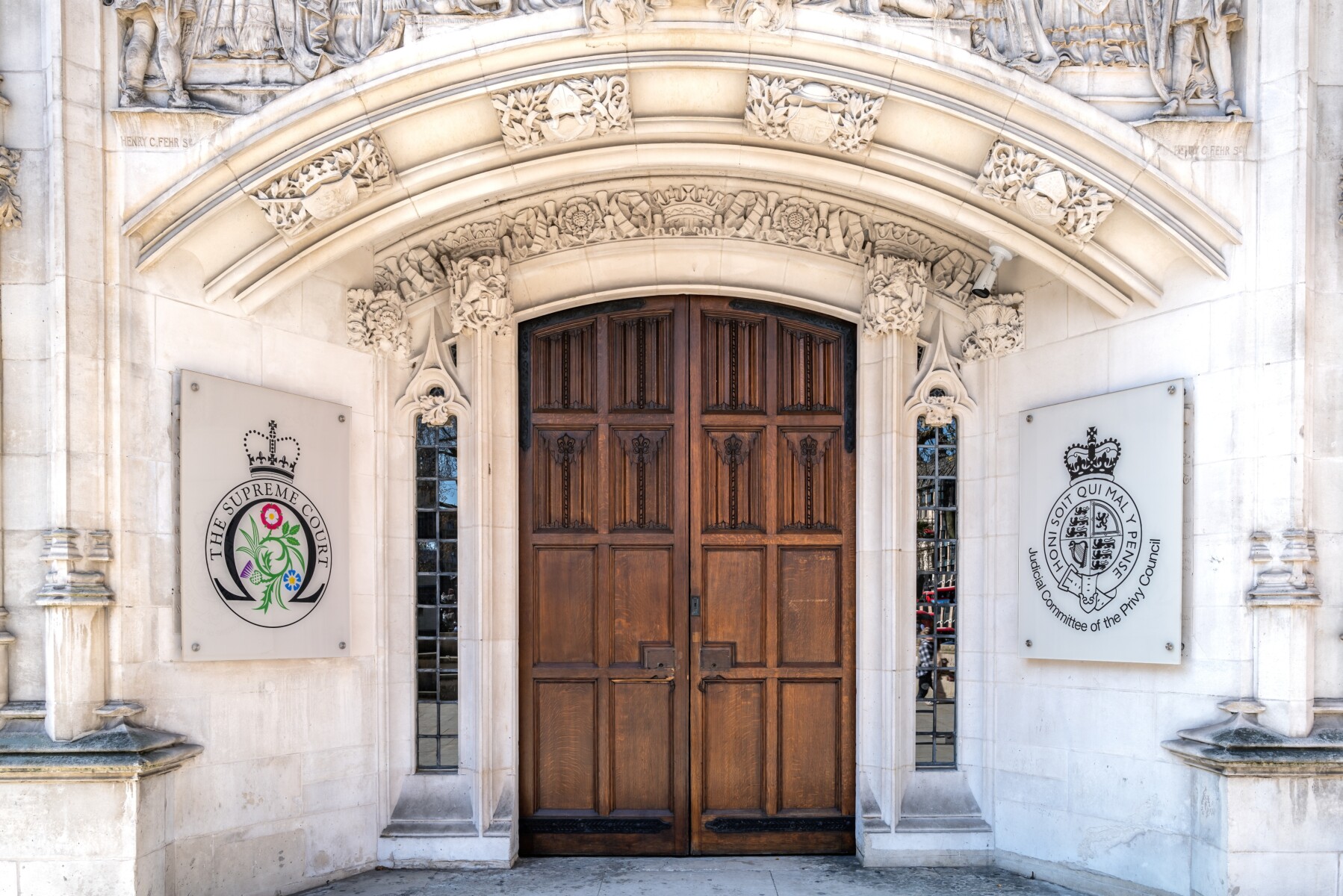
Standish v Standish: Livestream
30 April 2025
Today, Baroness Shackleton, Victoria Hingston and Marina Fitzalan Howard with Leading Counsel, Lord Faulks KC of Deka Chamber…
Read more
Contact Us for a Confidential Consultation
If you are involved in a high net worth divorce or need advice on the division of complex assets, business interests, trusts, or international property, our team is here to help. We are happy to discuss your circumstances, explain your options, and set out a clear path forward.