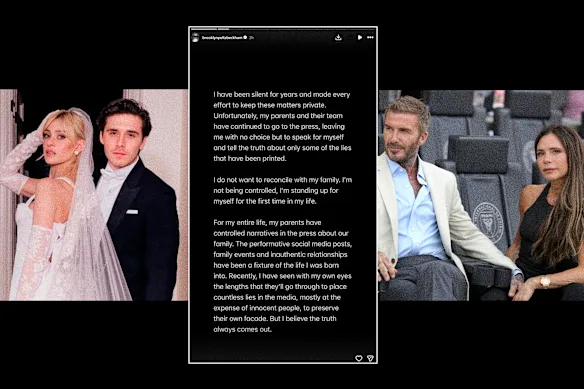
On 19 January 2026, Brooklyn Peltz Beckham published a six-page statement on Instagram that made headlines around the world. The 26-year-old declared he had “no interest” in reconciling with his parents, David and Victoria Beckham, accused them of “controlling narratives in the press” throughout his life, and alleged his mother “hijacked” his first dance at his 2022 wedding. He also claimed his parents repeatedly pressured him to sign away the rights to his name before his marriage.
While the allegations remain unproven and the Beckhams have not publicly responded, the episode raises important questions that I frequently discuss with clients: what are the consequences of airing family grievances in public, and how might such disclosures affect any future legal proceedings?
Why Social Media Is Not the Place to Resolve Family Disputes
The urge to tell your side of the story is entirely understandable. Brooklyn wrote that he had been “silent for years” and felt he had “no choice” but to speak after his parents allegedly continued briefing journalists. Many clients I advise express similar frustrations when they feel misrepresented or attacked.
However, broadcasting grievances to millions of followers rarely achieves the catharsis people expect. Instead, public posts invite commentary from strangers, harden positions on both sides, and make reconciliation far more difficult. In my experience advising families through high-conflict separations, disputes that might have been resolved through mediation often become entrenched once accusations have been published online. A statement posted in frustration can haunt negotiations for years whether or not you are a celebrity with millions of followers or whether your social media is open only to family and friends. I often see in my cases that clients come to regret comments posted to social media in the heat of the moment and then come back to haunt them in due course. As is often said, act in haste, repent at leisure.
What You Post Can Be Used Against You
Courts increasingly treat social media as evidence. Posts, stories, and even deleted content can be recovered and presented in legal proceedings. If Brooklyn Beckham’s parents were ever to pursue a defamation claim, or if a related contract dispute arose over the alleged pressure to “sign away the rights to his name”, his Instagram statement would be scrutinised line by line.
For ordinary families, the risks are just as real. In child-arrangement cases, judges consider each parent’s conduct, including whether they have exposed children to adult conflict or disparaged the other parent online. As I set out in my recent article on acrimonious divorce, a single inflammatory post can undermine an otherwise strong custody application. The Family Court takes a dim view of parties who wage litigation by social media rather than through proper legal channels.
Defamation, Harassment and Protective Orders
Allegations published to a wide audience are not consequence-free. English defamation law allows claimants to sue for statements that damage their reputation, and truth is a defence that must be proved by the defendant. If Brooklyn’s claims about his parents, from wedding-day conduct to alleged bribery, cannot be substantiated in court, he could face significant liability.
Repeated online attacks may also amount to harassment under the Protection from Harassment Act 1997, potentially leading to injunctions or even criminal prosecution. Reports suggest Brooklyn has instructed his parents to contact him only through lawyers and not to tag him on social media, a step that hints at the kind of formal boundaries parties can seek when communication breaks down. At Payne Hicks Beach, our colleagues in the Defamation and Reputation Management team, ranked Band 1 in Chambers UK 2026, regularly advise clients on these intersecting issues.
Coercive Control and Undue Influence: Recognising the Signs
Brooklyn alleged that he grew up with “overwhelming anxiety” and that his parents “controlled” him for most of his life. Since 2015, coercive or controlling behaviour within intimate or family relationships has been a criminal offence in England and Wales under the Serious Crime Act 2015. Signs include isolating someone from friends and family, controlling their finances, and manipulating them through threats or humiliation.
Separately, contracts signed under pressure may be challenged on the grounds of undue influence. Brooklyn’s claim that his parents tried to “bribe” him into signing away the rights to his name before his wedding raises questions about whether any such agreement was freely entered into. Courts can void contracts if one party exploited a relationship of trust to obtain an unfair advantage.
For anyone who recognises these patterns in their own family, the first step is to seek independent legal advice, not to post online. Our Family Law Team has extensive experience advising clients in situations involving alleged control or manipulation, and we can help you understand your options in a confidential setting.
The Emotional Cost of Public Conflict
Brooklyn said that since stepping away from his family, his anxiety has “disappeared.” While removing oneself from a toxic situation can be beneficial, engaging in public conflict typically has the opposite effect. Mental-health professionals consistently advise that online disputes amplify stress rather than relieving it. Engaging in a war of words keeps the dispute front of mind, invites criticism from strangers, and can exacerbate feelings of betrayal and anger.
As I emphasised in my article on managing self-care during separation, prioritising your wellbeing is essential. Therapy, mediation and confidential legal advice are all safer outlets than social media. Courts respect parties who conduct themselves with restraint; judges are far less sympathetic to those who wage litigation by Instagram.
Practical Steps to Protect Your Position
Engage early with experienced legal counsel. If communication has broken down, consider instructing solicitors to correspond on your behalf. Formal letters may feel impersonal, but they create a paper trail and prevent misunderstandings that can escalate conflict.
Avoid naming names online. Vague posts can still be linked to individuals, but explicit accusations carry far greater legal risk. Even “vague-booking” can be problematic if the subject is identifiable.
Document privately. If you need to record incidents for future legal proceedings, keep a contemporaneous diary rather than sharing evidence on social media. Your solicitor can advise on what to preserve and how to present it effectively.
Consider mediation or alternative dispute resolution. Court proceedings can be lengthy and costly. Many disputes can be resolved through mediation, which often results in more amicable solutions and preserves relationships, especially important where children are involved.
Know when to seek protection. If a relative’s behaviour crosses into harassment or coercive control, legal remedies exist. Non-molestation orders (often referred to as restraining orders) can restrict contact and provide peace of mind.
The Takeaway
Brooklyn Beckham’s Instagram statement is a cautionary tale for anyone contemplating a similar approach. Whatever the truth of his allegations, the public nature of his disclosure has almost certainly made reconciliation harder, exposed him to potential legal action, and ensured the dispute will be dissected by commentators for months to come.
For anyone facing a similar situation, the lesson is clear: put down the phone, close the app, and call a solicitor instead. Some battles are best fought behind closed doors.
Why Choose Payne Hicks Beach?
Our Family Law Team has been ranked Band 1 for Family/Matrimonial Finance: Ultra High Net Worth in Chambers UK 2026, reflecting our extensive experience advising high-net-worth families and individuals facing complex, high-conflict situations. We understand the importance of strategic, compassionate legal advice tailored to each client’s circumstances.
If you are concerned about a family dispute or need assistance managing ongoing conflicts, please contact us. Our family law experts can help you understand your rights, explore dispute resolution options, and protect your interests, ensuring a resolution that prioritises your family’s welfare.
For further information, please contact Alex O’Dwyer Curran or your usual contact in the Family Department, or telephone on 020 7465 4300.
To learn more about divorce and separation, you can download a free copy of our Essential Guide to Divorce and Family Law on our website.
ABOUT THE AUTHOR
Alex O’Dwyer Curran
Senior Associate, Family Department. Alex is ranked in Chambers UK 2026 and Chambers High Net Worth 2025 for Family/Matrimonial Finance: Ultra High Net Worth. He advises clients on all aspects of relationship breakdown, including divorce, financial remedies, cohabitation disputes and matters involving children. He is also recognised in the Legal 500